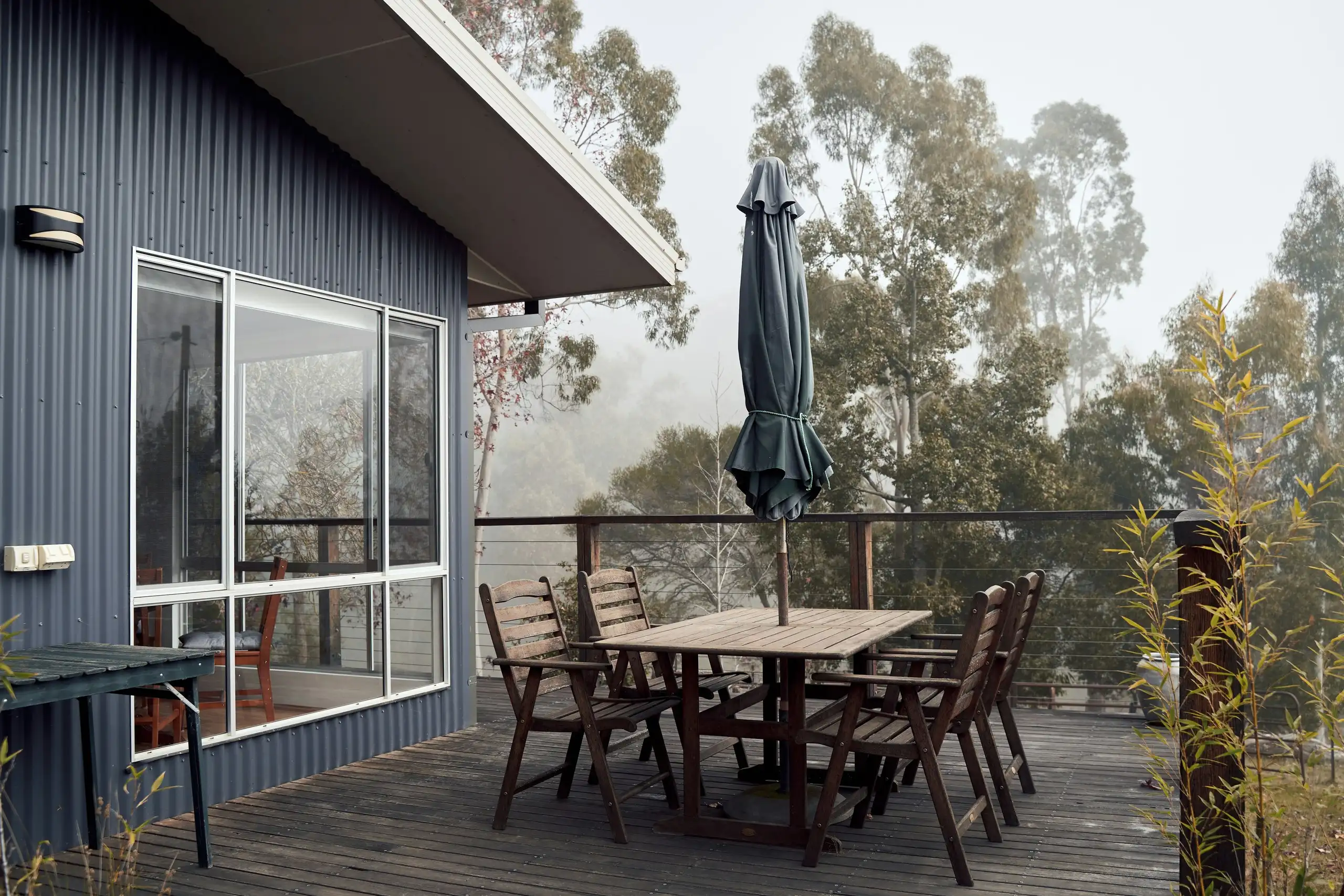
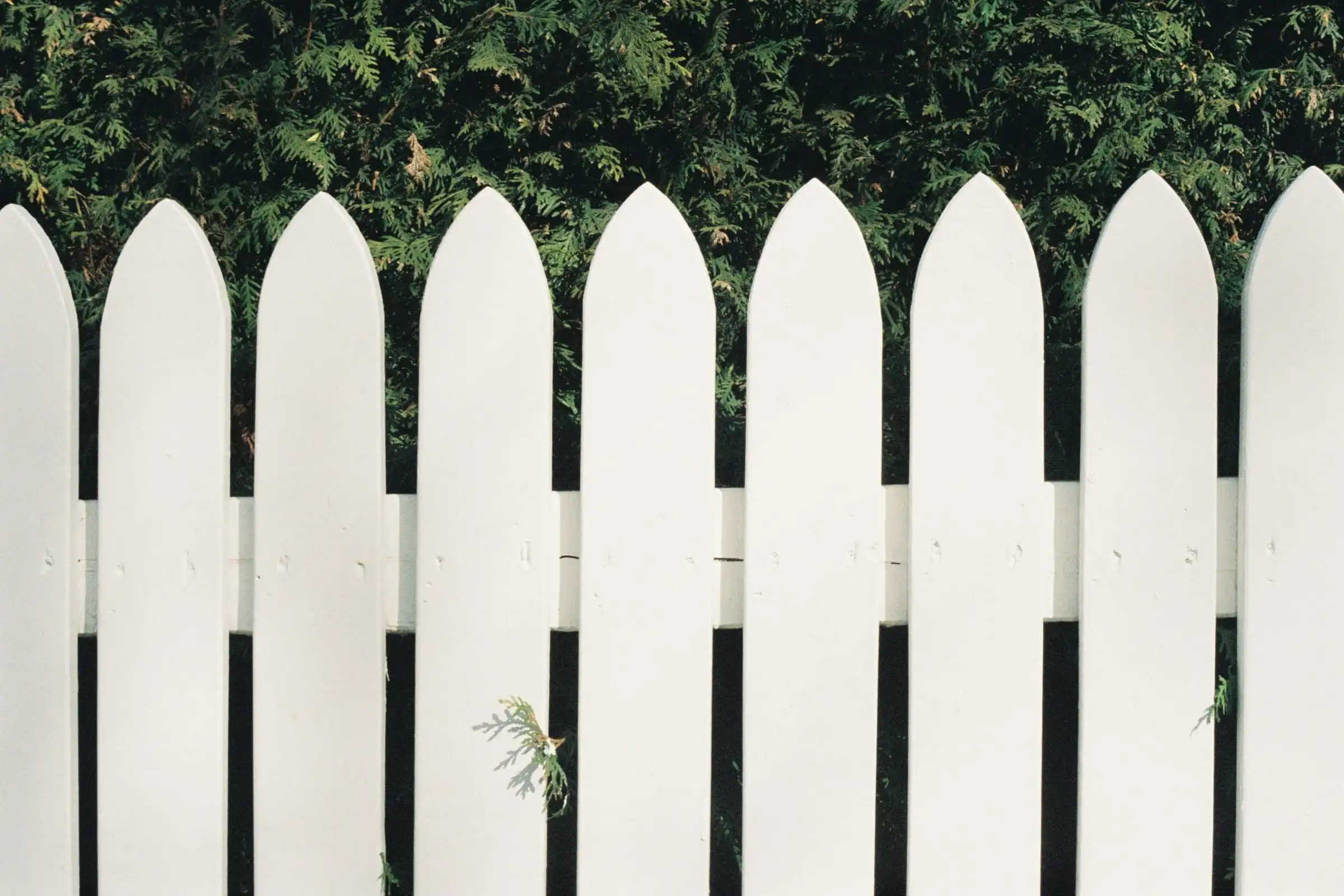
Corella Painting does deck staining, deck oiling and fence painting across Newcastle and Lake Macquarie. A grey, dried-out deck is cleaned back to the timber, left to dry right through, then given two coats of oil or stain. Paling, picket and Colorbond fences are prepped and painted to suit what they're made of.
From the surface up, in the order the work happens. Your written quote lists the same layers by name, so you can see nothing has been skipped.
Your deck as it is
Sun and rain break down the surface of bare or under-coated timber, leaving it grey, furry and prone to splitting. Under that grey layer the boards are usually sound, and the colour comes back once it's cleaned off.
Cleaned and rinsed
A deck cleaner is scrubbed into the boards to lift the grey, the old coating and any mould, then rinsed off thoroughly. Loose nails are punched down and any rough or lifting spots sanded back.
Left to dry right through
The boards are left until they're dry right through, not just on top. Oil or stain over damp timber sits on the surface and fails early, so this can mean a day or two of waiting after the wash.
First coat of oil or stain
Applied along the length of each board, a few boards at a time, so there are no lap marks. Board ends and cut edges get extra, since that's where water soaks in first.
Second coat
Once the first has dried as long as the maker's data sheet says, the second coat goes on the same way. Then the deck stays off limits until it's dry enough to walk on and put furniture back.
Oil, stain or paint for your deck
These three finishes behave differently, and the right one depends on the deck you have and how much upkeep you want.
Deck oil soaks into the timber rather than sitting on it. It brings the colour of the wood back and wears away slowly, so recoating is a clean and another coat, with no peeling to deal with. It needs doing more often than the other two.
Deck stain carries more pigment. It evens out boards that have weathered unevenly and gives you a stronger colour, from a light honey to a dark brown. It still soaks in, so it fades rather than flaking.
Deck paint forms a film on top. It hides old boards and patched repairs and gives a solid colour, but on a surface people walk on it wears through in the traffic lanes first, and once it lifts, getting back to bare timber is hard work. We use it where a deck has been painted before and stripping it isn't worth it.
On the Belmont deck in our sample projects, the hardwood boards were cleaned, left to dry for two days and then oiled, and the balustrades and posts were painted gloss white. That mix is common: oil on the boards you walk on, paint on the parts you only look at.
Getting a deck to take the oil
The wash is what decides how the finish looks. A grey deck that's only been swept and oiled stays grey under the oil. So the cleaner is worked into the boards with a stiff brush, left the right time and rinsed off well. Then we wait until the timber is dry right through before the first coat goes on. If you're getting your deck stained before a party, book us with a week to spare.
Timber paling and picket fences
A paling fence soaks up paint, especially rough-sawn timber that's never been coated. We wash it, scrape back anything flaking, and prime bare palings before the top coats, or use a fence stain or paint made for rough timber. Pickets are slower: every picket has two faces and two edges, and every one gets cut in by brush.
Close to the water, salt gets into every gap. On the Stockton pickets in our sample projects, a block from the beach, the timber was sanded back, primed with a marine-grade undercoat and finished in two coats of blue, with every nail head sealed so it couldn't rust through the paint.
Colorbond fences
Colorbond fencing fades and chalks the same way a Colorbond roof does, and it can be overpainted. BlueScope's bulletin on overpainting its products sets out the prep: a wash with household detergent and a soft broom or mop, a light scour with kitchen scourer pads (never steel wool, whose filings rust on the panel), a rinse with fresh water, and a dry surface before painting. It names water-based acrylic as generally the most suitable paint. Any rust at the base of the posts or along a scratch is brushed back and spot-primed with a zinc-rich primer.
Overpainting voids any BlueScope warranty on the panels, so if your fence is new, we'll say so before you decide.
What's on your quote
Your quote gives the deck in square metres and the fence in linear metres, which sides are being done, the cleaner, the oil, stain or paint by maker, product and colour, and how many coats. Steps, balustrades, posts and gates are listed separately so you can see what each part costs.
Decks & fences: your questions
How much does deck staining cost in Newcastle?
As a guide from our own jobs, a deck cleaned and oiled or stained comes to $35 to $60 + GST a square metre. A small, sound deck at ground level sits at the low end. Steps, balustrades, a lot of sanding or a deck high off the ground push it up. The quote measures your deck and lists each part.
Our deck was painted years ago and it's peeling. Can you oil it now?
Not straight away. Oil can't soak into timber that still has paint on it, so the old paint has to come off first, and that's a much bigger job than a clean. The other option is to keep it painted with a proper deck paint. We'll look at how much is left and give you a price for each.
How much does fence painting cost?
As a guide from our own jobs, a paling or picket fence painted comes to $30 to $55 + GST a linear metre. Painting both sides, a fence that needs a lot of scraping, and pickets with lots of edges to cut in sit higher. A short front fence on its own is a normal job for us.
Can a Colorbond fence be painted a different colour?
Yes. BlueScope's technical bulletin on overpainting covers its coated steel, and we prepare the panels the way it sets out. Overpainting voids any BlueScope warranty, so on a newer fence we'll mention it. If the fence is shared, we suggest agreeing the colour with your neighbour before we start.
When is the best time to oil a deck?
A spell of dry weather, ideally in spring so it's ready for summer. We need dry boards after the wash and a dry day or two for the coats, so we watch the forecast and don't start if rain is due before the maker's drying time is up.
Do you fix loose or rotten deck boards?
We punch down nails and sand rough spots as part of the job. Replacing boards, joists or a wobbly balustrade is a carpenter's work. If we find boards that need replacing, we show you, and once they're in we can stain them to sit in with the rest.
Tell us what needs painting
A few lines and a photo or two is enough. We'll ring to book a look, then leave you a written quote with every surface and every coat on it. No obligation, and no follow-up calls chasing you if you decide to wait a while longer.