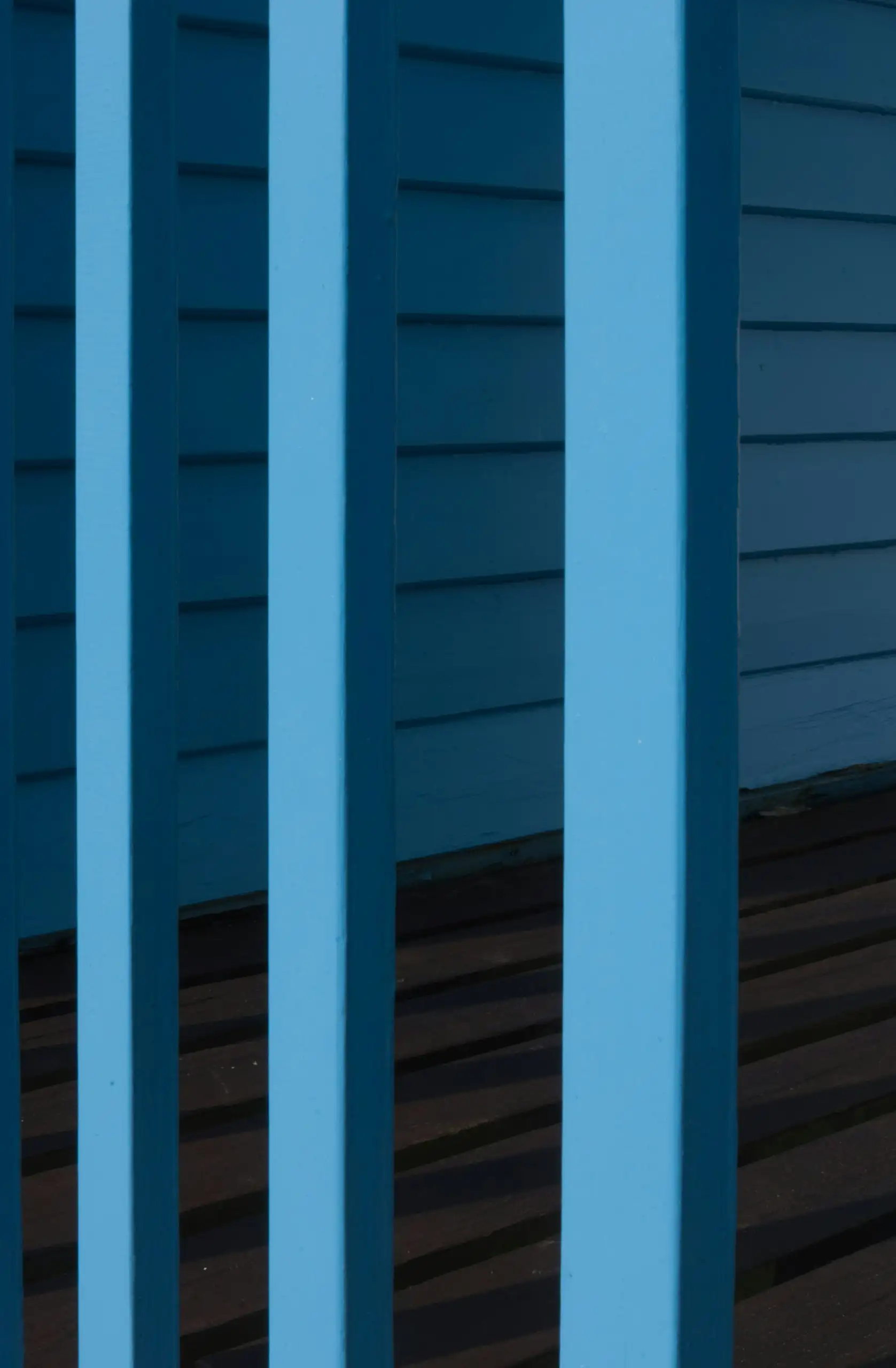
Corella Painting does exterior house painting across Newcastle and Lake Macquarie, from Merewether weatherboards to rendered brick in Belmont. Every wall is washed, every loose flake scraped back, bare timber primed, and then two full coats go on in the colours you choose.
From the surface up, in the order the work happens. Your written quote lists the same layers by name, so you can see nothing has been skipped.
Your walls as they are
Weatherboard, render or brick, each with its own faults. Boards crack and flake along the grain, render cracks around windows and corners, and old painted brick lets go in patches where water gets behind it.
Washed, mould treated
Every wall is washed down to take off dust, salt and cobwebs. The shady south and east sides usually carry mould, and those get a mould wash first, because paint laid over live mould comes straight back through.
Scraped, sanded, filled, primed
Loose paint is scraped back to a firm edge and sanded smooth so the old outline doesn't show. Cracks and nail holes are filled, and any bare timber gets a primer before it sees a top coat.
First coat
A full coat of exterior acrylic from the same maker as the primer, cut in by brush around windows, eaves and trims, then rolled or brushed across the open wall.
Top coat, in your colours
The second full coat, laid on once the first has dried for as long as the maker's data sheet says. Trims, fascias and doors get their own colour and their own two coats, usually in a gloss or semi-gloss.
Weatherboard painting
Timber weatherboards are the house most people picture when they think of an old Newcastle street, and they're the most work to paint well. Timber moves with the weather. Paint on the bottom edge of each board takes the most water and is the first to crack, and on the sunny side the top coat chalks and fades long before the shady side does.
So weatherboard painting is mostly prep. Every board gets washed, then scraped where it's lifting, with extra time on the bottom edges and around nail heads. Bare patches are sanded smooth into the surrounding paint so you can't see the outline through the new colour, then primed. On the Merewether house in our sample projects, the old paint was flaking on most of the boards, so every one was scraped and spot-primed before the charcoal went on.
Fibre cement boards and cladding are handled the same way, with a wash and a primer where the surface has worn back. We check how old the sheeting is before we sand anything.
Render painting
Rendered walls hide cracks well until they don't. The usual spots are the corners of windows and doors and along any join where two materials meet. Fine cracks get raked out and filled with a flexible filler so they don't reappear the next winter. Wider cracks can point to movement in the wall, and that's a builder's question before it's a painter's.
Render also holds onto dirt and mould in its texture. A thorough wash matters more here than on a smooth board, and the shady walls get a mould wash first. Where the old coat has gone powdery, a sealer goes on so the new paint has something firm to bond to. Then the two top coats, rolled into the texture so no thin spots are left in the hollows.
Brick, painted and unpainted
Brick that's already painted gets repainted like render: washed, loose paint scraped off, sealed where it's chalky, two coats. If it's peeling in a band near the ground, water is usually coming up from below, and we'll point that out because more paint won't fix it.
Unpainted face brick is another matter. We'd usually advise against painting it. Face brick weathers without help and needs no coating to last, and once it's painted that paint has to be kept up. In the City of Newcastle, the development control plan lists exposed face brick on facades and front fences among the elements to keep in its heritage conservation areas, which take in parts of Hamilton, Merewether, Cooks Hill and The Hill. If your house is in one, check with council before deciding to paint the brick. We're happy to paint the timber around it.
The parts that go with the walls
An exterior repaint isn't just the walls. Eaves, fascias, gutters, downpipes, window frames, doors and the front steps are all on the list, and they usually take as long as the walls because of the cutting-in. They go in a harder-wearing enamel or semi-gloss. If you only want the trims done and the walls are still fine, that's a job in itself.
What's on your quote
Your quote lists each wall by surface, the repairs we found, the primer and the paint by maker, product and colour, and every coat. It names what isn't included, like carpentry, so nothing turns up on the final bill as a surprise. If you're comparing quotes from exterior painters in Newcastle, check the prep line first. That's where the cheaper ones save their money.
Exterior painting: your questions
How much does exterior house painting cost in Newcastle?
As a guide from our own jobs, a full repaint of a single-storey house comes to $9,000 to $18,000 + GST, and trims, fascias and doors on their own start from about $3,500 + GST. The range is wide because prep is the big variable. A house that's flaking all over takes days of scraping before any paint goes on.
Can you paint over the old paint, or does it all have to come off?
Most of it can stay. Paint that's still firmly stuck is a good base once it's washed and sanded. What has to go is anything loose, flaking or bubbling, and we scrape that back to an edge that won't lift. Stripping a whole house back to bare timber is rarely needed and we'd tell you why before quoting it.
Should we paint our face brick house?
Usually we'd talk you out of it. Face brick needs no paint to last, and once it's painted you're repainting it for the life of the house. In Newcastle's heritage conservation areas the council's own development control plan lists exposed face brick among the things to keep, so we always suggest checking with council first there.
What time of year is best for an exterior repaint?
Spring and autumn suit it best around here, when the walls aren't baking and the evenings stay dry. We can paint in summer by following the sun around the house, doing each side once it's in shade. Winter works too on dry weeks, with late starts so the dew is gone.
Do you replace rotten weatherboards before painting?
We find them, mark them and show you. Small soft spots can be cut out and filled. A board that's rotten right through needs a carpenter to replace it, and we can paint the new board in with the rest so it disappears. Painting over rot only buys a season.
Will you need to put up scaffolding?
Not on most single-storey houses. Ladders and planks reach the eaves and gutters. Two-storey walls, steep blocks and high gables may need scaffolding or a mobile platform, and if yours does, the quote says so and includes it. Nobody works off a ladder higher than is safe.
Tell us what needs painting
A few lines and a photo or two is enough. We'll ring to book a look, then leave you a written quote with every surface and every coat on it. No obligation, and no follow-up calls chasing you if you decide to wait a while longer.