Painter Hamilton, for terraces, cottages and Beaumont Street
Your Hamilton house was probably built close to the boundary, close to its neighbours and well before anyone planned for a car. Corella Painting works with that, inside and out, from our base in Adamstown five minutes away.
Hamilton's houses were built for miners and company workers before the motor car, so a paint job here starts with where the ladder fits and where the van parks.
Painting in Hamilton
Hamilton grew on land the Australian Agricultural Company released from the 1880s, and its streets still show it. Around the railway station, which opened in 1887, the City of Newcastle's DCP describes small lots with late Victorian terraces, Federation cottages and interwar bungalows, built close to the boundaries and often with no garage. Beaumont Street runs through the middle, a strip of two-storey shops with verandahs over the footpath. Both are heritage conservation areas, and across Gordon Avenue, in Hamilton East and Hamilton South, a third begins: the Hamilton South 'Garden Suburb'.
Built close and built small
Most of old Hamilton was laid out for people who walked. The DCP puts it plainly: small lots, houses towards the front of the block, low front fences, and very little space for cars. That's what gives the streets their character, and it changes how a paint job runs. There's often no driveway for the van, no side yard for a trestle, and a gap of less than a metre between your wall and the next house.
So we plan the job around the street. The quote visit covers where the van can legally stand, how the ladders get to the back, and which walls need a word with the neighbour first. A side passage that never dries out gets a mould wash and time to dry before any paint goes on, because that's the wall that peels first in Hamilton.
Inside a Hamilton terrace
A lot of our work here is indoors. Terraces and cottages from the late 1800s and early 1900s have tall walls, picture rails, ornate cornices and timber skirtings with many coats of paint on them. Plaster that old cracks along the walls and around the doors, and every crack has to be raked out, filled and sanded flat, or it shows through the new colour within a month.
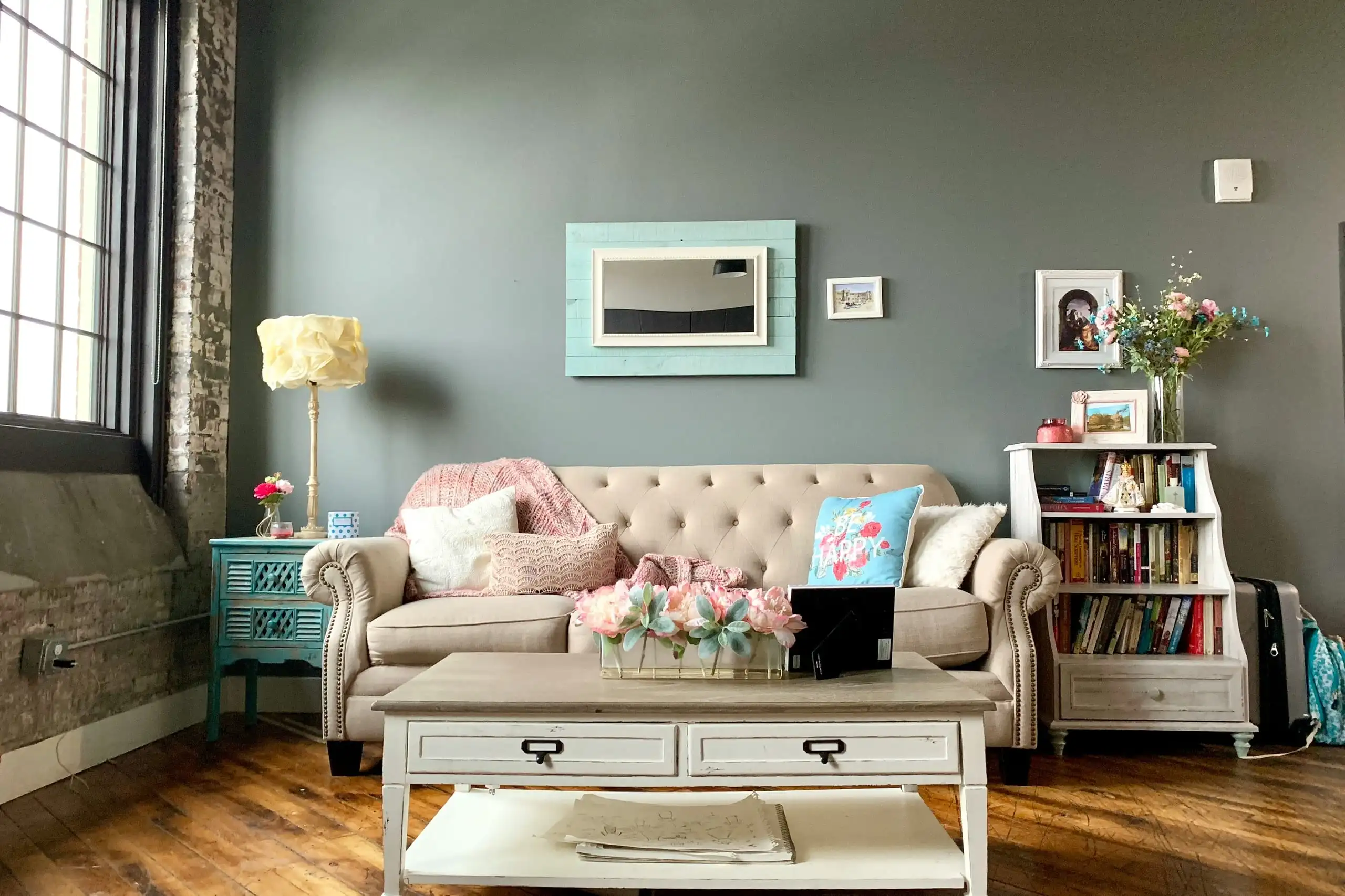
Colour matters more in these rooms than you'd think. They tend to be narrow, with windows at one end, so the light changes across the day. On the grey-green living room we painted in Hamilton, the owner tried three sample patches on the wall before choosing one, and we'd suggest you do the same. We paint the patches, you live with them for a day or two, and then we start.
Beaumont Street
Beaumont Street is its own heritage conservation area, a strip of two-storey shops and shop-top housing built to the footpath, with parapets hiding the roofs and verandahs over the street, many with cast-iron lacework. The DCP notes that the 1989 earthquake did serious damage here, and that the surviving shopfronts were saved through careful planning. It asks for their face brick and stone to be kept exposed.
Painting a shopfront there means working above an open footpath and around trading hours. We set up so the shop can stay open, paint the upper facade and the verandah railings when the street is quiet, and do the inside after close. The rendered and timber parts get repainted, the face brick stays as built, and any change of colour on the street front is checked with council before it's ordered.
What we paint in Hamilton
01
Living rooms and bedrooms in older houses
High walls, picture rails and decades of paint on the skirtings. Cracks raked out and filled, sample patches on the wall before you choose, and the room handed back the same week, like the grey-green living room we painted here in two days.
Verandah posts, fretwork, timber windows and the painted parts of the front wall, done from a short ladder or a small platform because the house sits right on the footpath. Face brick is cleaned, never painted.
Upper facades, parapets, cast-iron verandah railings and shop interiors, worked early or after close so the shop stays open, with the footpath kept clear under the scaffold.
Is my Hamilton house inside a heritage conservation area?
There's a good chance. The Hamilton Residential Precinct covers the streets between Donald Street and Tudor Street, from Murray and Devon Streets across to Gordon Avenue, and the Business Centre covers the blocks around Beaumont Street. We check your address on the council's heritage map before we quote any change of colour on the street front.
We don't have a driveway. Where do you park?
On the street, like you do. The DCP notes that the old part of Hamilton has very few garages, so we plan for it: the van goes where it's legal, the ladders and drop sheets come in by hand, and on a tight street we bring only what the day needs. If a work zone or a skip is needed, we tell you on the quote.
The gap between our house and the next is less than a metre. Can you paint that wall?
Usually, yes. On a narrow side passage we use a short ladder or a small platform rather than scaffold, and we talk to your neighbour before we start, because drop sheets and a ladder may need to touch their side. That wall is often the dampest on the house, so it gets a mould wash before any paint.
Can you paint the upstairs of our Beaumont Street shop without closing?
Yes. We work the upper facade and the verandah early in the morning or after close, keep the footpath safe and clear, and paint the inside of the shop out of hours. In the Business Centre heritage area the face brick stays as it is, and we check with council before any change to the colours on the street.
What does one room cost in a Hamilton cottage?
As a guide from our own jobs, one room's walls and ceiling start from about $900 + GST. Older Hamilton rooms often run higher, because the walls are tall, the picture rails and skirtings carry many coats, and cracked plaster needs raking out and filling first. Your quote says exactly what's included.
We're just across Gordon Avenue. Which rules apply?
Gordon Avenue is the eastern edge of the Hamilton Residential Precinct, and the Hamilton South 'Garden Suburb' heritage conservation area starts on the other side of it, running into Hamilton East, Hamilton South and Merewether. The two areas have different character statements, so houses either side of the avenue can fall under different controls. We check which map your address sits on before quoting.
Tell us what needs painting
A few lines and a photo or two is enough. We'll ring to book a look, then leave you a written quote with every surface and every coat on it. No obligation, and no follow-up calls chasing you if you decide to wait a while longer.